Portfolio Analysis
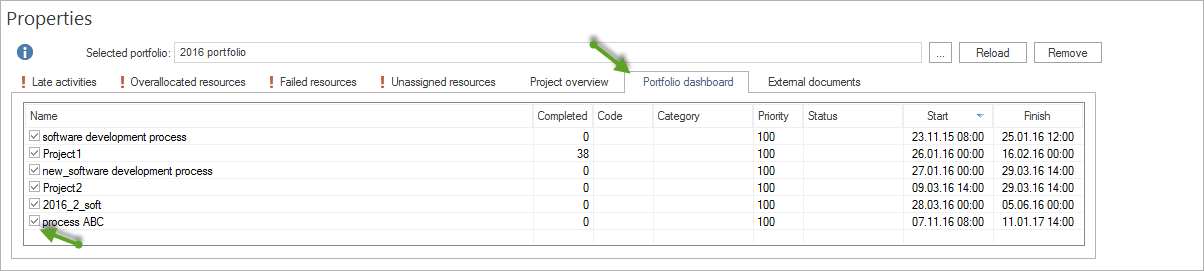
Portfolio analysis evaluates several projects together and prepares decisions: Which projects are feasible? Which resources are scarce? Which priorities apply? Which risks result from dates, resource load, and cross-project dependencies?
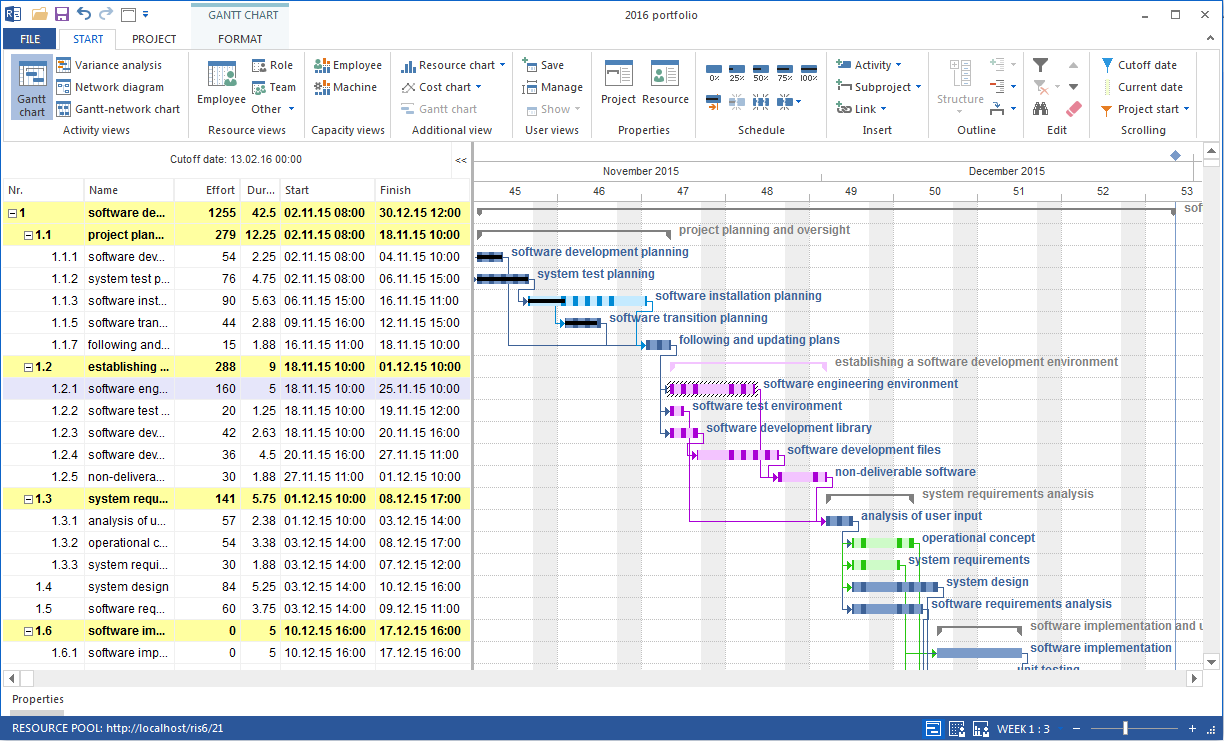
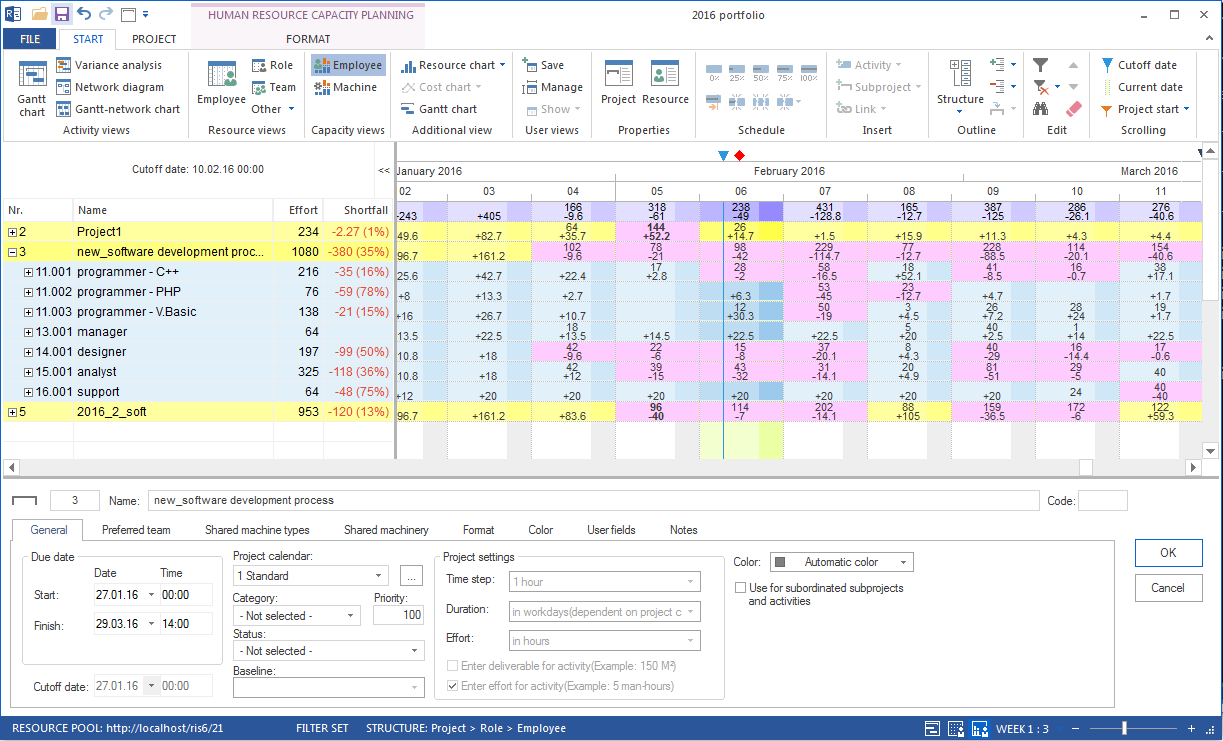
In Rillsoft Project, portfolio analysis combines project status, priorities, capacity balancing, portfolio Gantt views, resource utilisation, baselines, and variance analysis.
Analysis Levels
- Project status
Which projects are planned, active, paused, critical, or completed?
- Priority
Which projects should receive resources first when conflicts occur?
- Schedule
Which projects overlap in a critical way or endanger dependent projects?
- Resources
Which employees, teams, roles, or professional qualifications are overloaded or under-supplied?
- Dependencies
Which cross-project links create delay, negative link distance, or decision needs?
- Controlling
Which projects deviate from the approved baseline in dates, effort, or cost?
Portfolio As A Decision System
A portfolio becomes valuable when it is used to compare alternatives, not only to display planned work.
Typical questions:
What happens if a low-priority project is postponed?
Which resources become available if a project is removed from the calculation?
Which professional qualification is the bottleneck in the next quarter?
Which projects cannot run at the same time with the current resource pool?
Which decision must be made by management or PMO?
Simulations
In portfolio work, projects can be included or excluded from capacity calculation to compare scenarios. Use this for focused simulations:
temporarily remove a project from the calculation
review the resource situation again
compare the effect on bottleneck qualifications
record the decision and the assumptions
Decision Brief
A useful portfolio analysis produces a decision brief, not just screenshots. Include:
status and priority of affected projects
critical dates and milestones
affected resources or professional qualifications
root cause of the bottleneck or delay
possible alternatives
expected effect of each alternative
recommended decision
Connect Analysis With Baselines
Portfolio analysis should distinguish between an unapproved planning variant and an approved plan. Use baselines to preserve the approved reference plan for variance analysis. If a portfolio decision changes dates, resources, or scope, save a new baseline only after the change has been approved.
Typical Mistakes
The portfolio is used only as a Gantt overview.
Priorities are maintained but ignored during capacity decisions.
Simulations are performed but not documented.
Resource bottlenecks are evaluated without qualification-based demand.
Management receives data but no decision proposal.
Baselines are updated before the decision is approved.