Prepare a Status Report
A status report should not only describe the current project state. It should show whether the project can be controlled and which decisions are required.
Use target/actual comparison, project information, and resource views to base the report on checkable data.

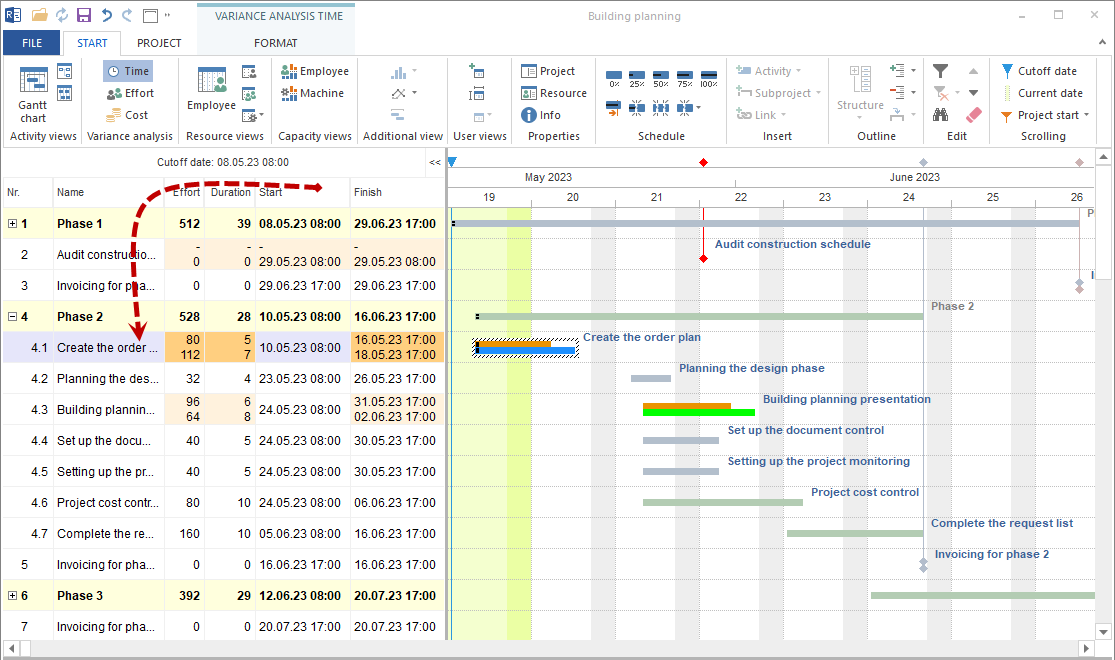
Preparation
Before creating the status report, check:
Is the correct baseline selected?
Is the cutoff date set?
Are progress and actual effort current?
Are known absences and non-working days entered?
Are bottlenecks from capacity balancing considered?
Are cost and financing data current enough for a statement?
Contents of the Status Report
A reliable status report contains:
current state at the cutoff date
most important schedule deviations
most important effort deviations
most important cost deviations
resource bottlenecks and unassigned role effort
risks for critical path, finish date, and budget
actions already taken
open decisions
recommendation for next steps
Formulate Deviations Clearly
Always describe deviations with cause and effect.
Less helpful:
“Task is late.”
“Costs are higher.”
“Resource is overloaded.”
Better:
“Prepare assembly is three working days behind the baseline because the assigned employee was unavailable due to non-working days. The successor is on the critical path.”
“Actual effort for design is above the baseline. This increases expected personnel costs and reduces available capacity for two downstream projects.”
“Role demand for design engineer is not fully covered by employees in calendar weeks 22 to 24.”
Make Decision Needs Visible
Mark which points need a decision:
Question |
Typical decision |
|---|---|
Finish date endangered? |
Move date, change scope, or provide additional capacity. |
Resources missing? |
Reassign employees, check external capacity, or prioritize projects. |
Effort increasing? |
Confirm remaining effort, check budget, or adjust planning. |
Costs increasing? |
Clarify financing, budget approval, or scope. |
Portfolio affected? |
Align priorities with PMO or management. |
Status in Portfolio Context
If the project is part of a portfolio, the individual project view is not enough. Also check:
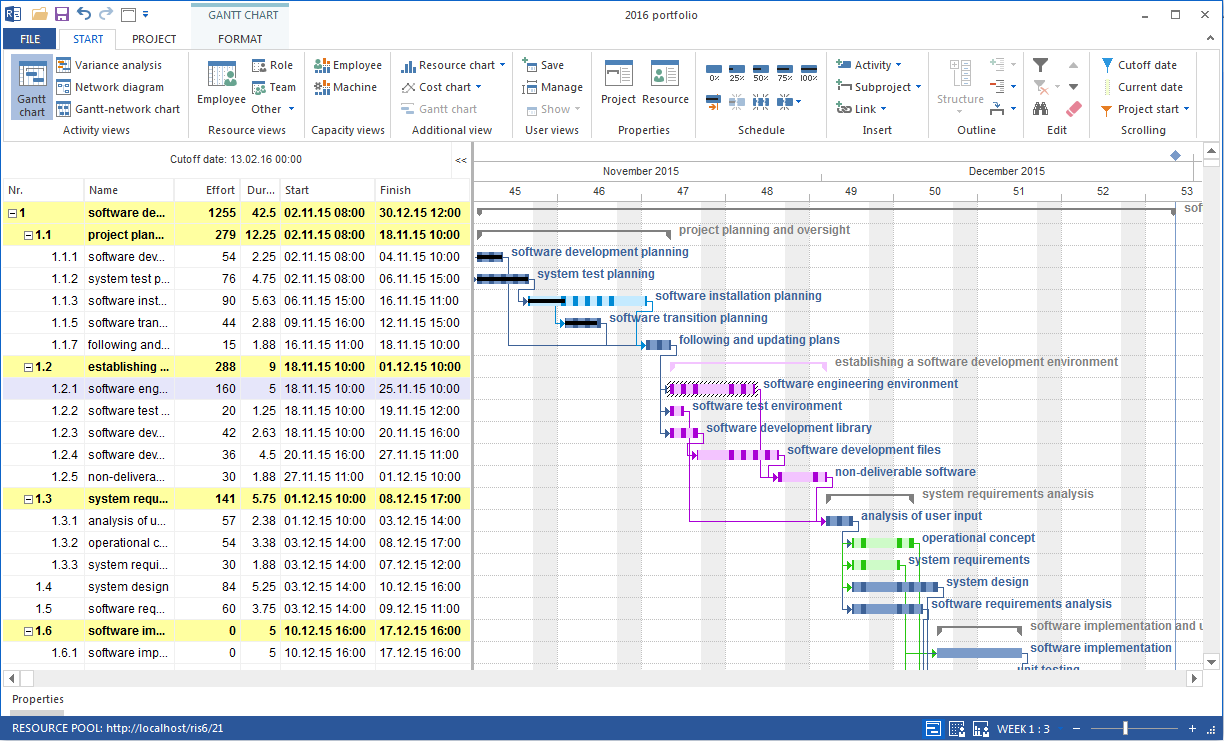
Which other projects use the same employees?
Does replanning create new bottlenecks in the portfolio?
Does project priority change?
Are cross-project dependencies affected?
Does management need to decide between competing project goals?
Result
After preparation, the status report should clearly answer:
Is the project on plan?
Which deviations are critical?
Which causes are known?
Which actions have already been started?
Which decision is needed?