Manual Correction or Capacity Balancing?
Decision
Correct manually when the cause is clear and locally limited. Use capacity balancing when dates, resource demand, and resource supply must be evaluated together.
Manual Correction
A manual correction is useful when:
an incorrect task date was entered
a dependency is technically wrong
a task must remain fixed
one effort value is obviously wrong
a small adjustment has no resource impact
Risk: manual corrections can smooth symptoms without solving the cause.
Capacity Balancing
Capacity balancing is useful when:
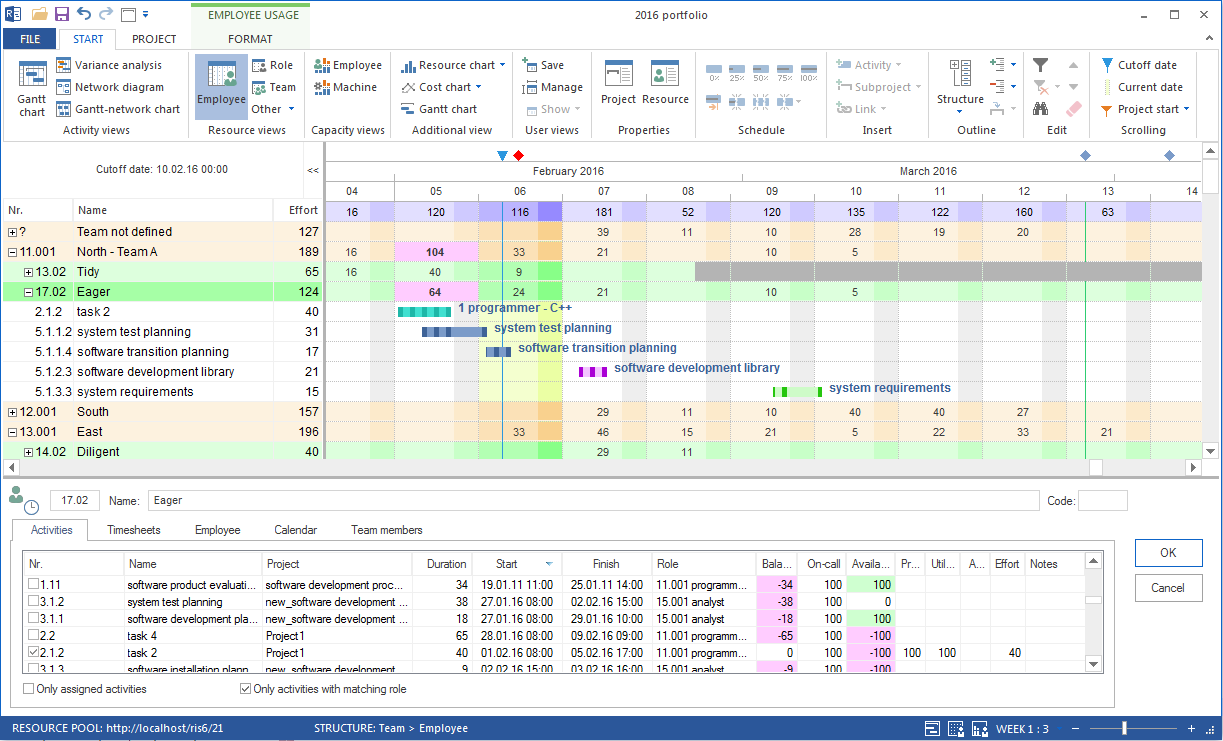
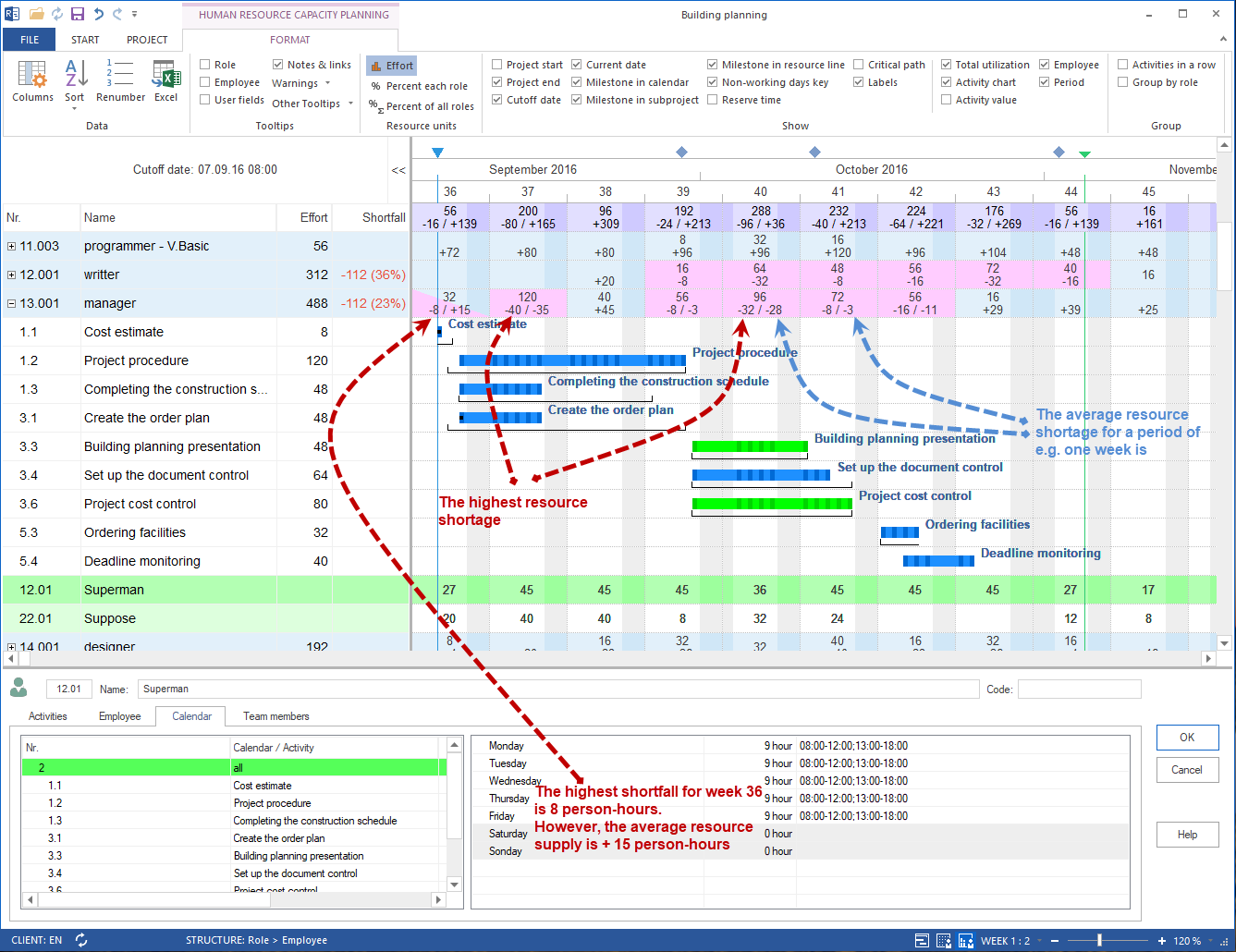
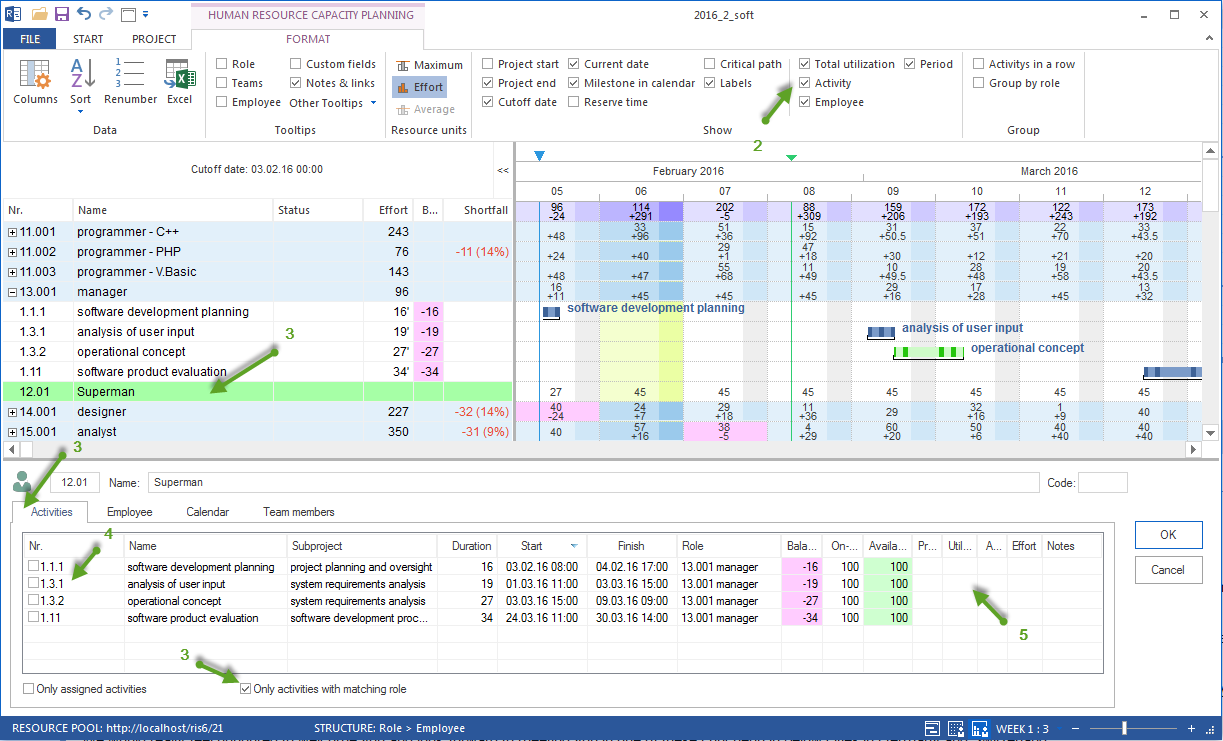
employees are overloaded or role demand is not covered
several projects use the same resources
non-working days, vacation, or part-time work affect the date
role demand is not yet covered by named employees
a project date can only be reached with sufficient capacity
Decision Table
Situation |
Recommendation |
|---|---|
Wrong task date |
Correct manually and check scheduling logic |
Overloaded employee |
Capacity balancing |
Missing professional qualification |
Capacity balancing |
Wrong dependency |
Correct the dependency |
Several projects compete for resources |
Capacity balancing in the portfolio context |
Control Question
If you cannot explain why a date or utilization is wrong, use analysis views and capacity balancing first. Correct the plan only afterwards.