Executive Management
Executive management does not need a detailed view of every task. It needs a reliable view of feasibility, risks, priorities, bottlenecks, and effects on delivery dates or costs.
Rillsoft Project supports this view through portfolio, capacity planning, project priorities, status information, and target/actual comparison. The decisive question is: which projects are realistically feasible with the available employees, qualifications, and machinery?
Typical Tasks
evaluate the project portfolio
identify bottlenecks and risks
set or confirm project priorities
use decision-ready evaluations
check the strategic resource situation
identify critical qualifications and key people
evaluate the effects of project shifts
prepare investment, staffing, or priority decisions
Working Path for Executive Management
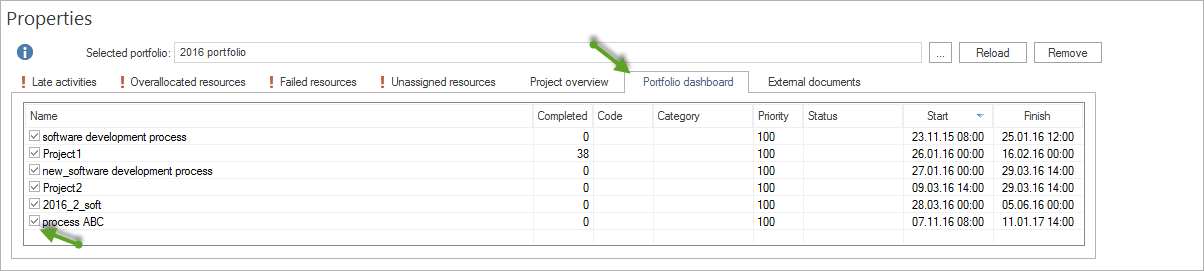
Check the portfolio dashboard
Review active projects with status, priority, start, finish, and responsible persons.
Evaluate feasibility
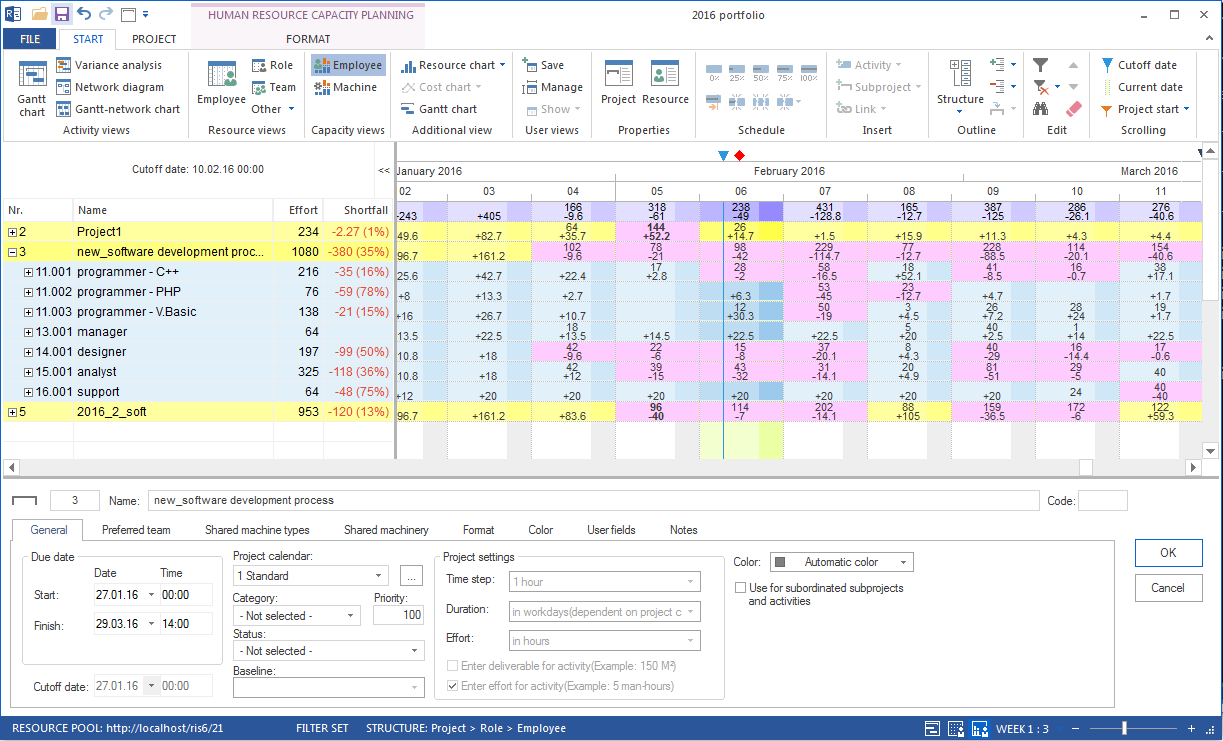
Check whether available employees, qualifications, and machine capacities fit the planned project workload.
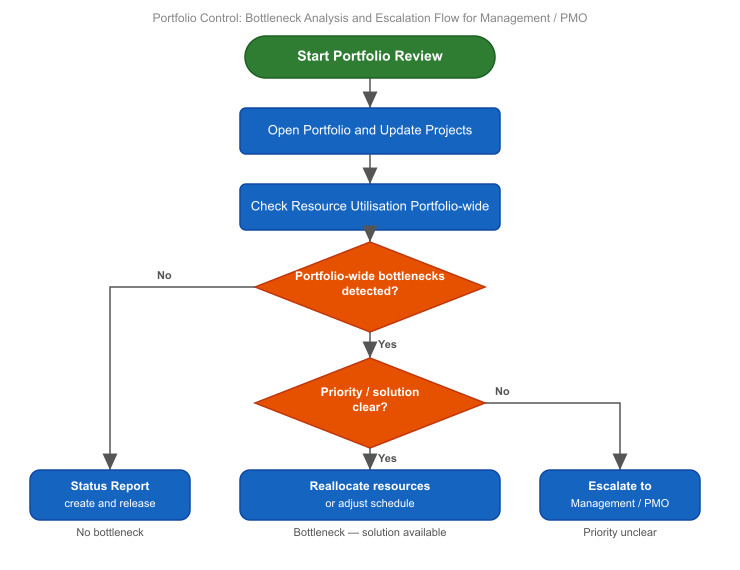
Identify bottleneck projects
Watch for projects that bind scarce resources for a long time or endanger downstream projects.
Decide priorities
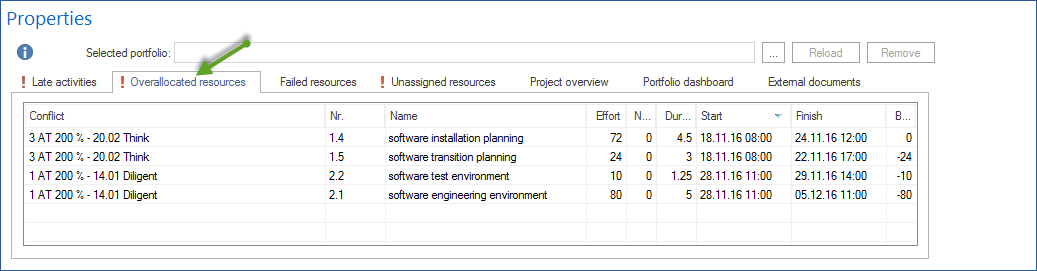
If not all projects can realistically be implemented at the same time, priorities, dates, or resources must be clarified.
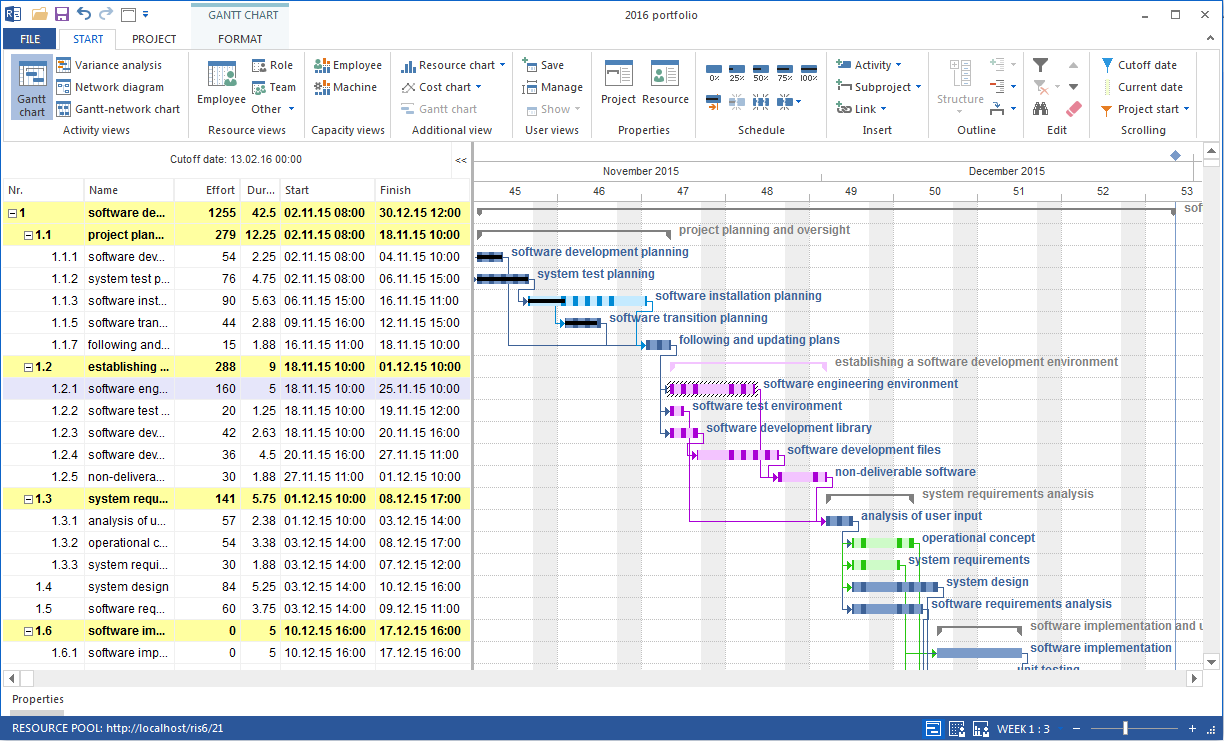
Evaluate status and deviations
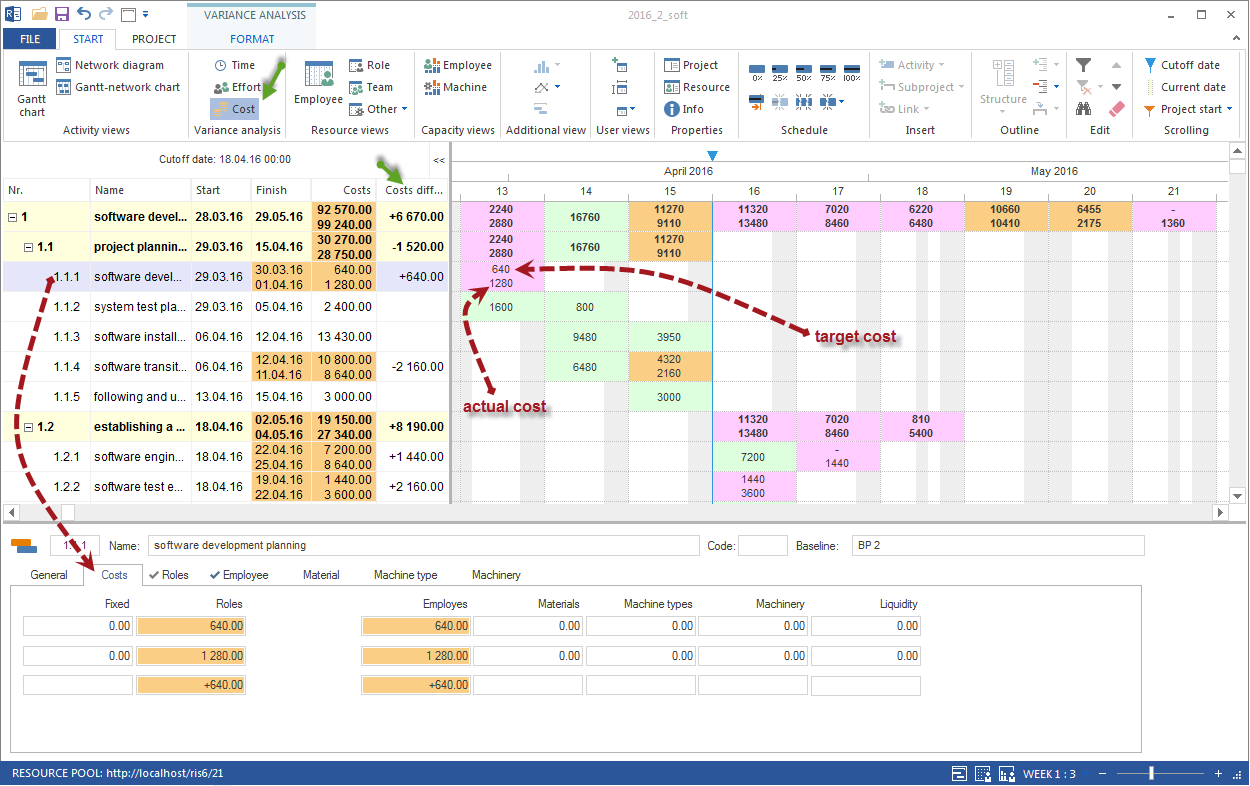
Use status reports and target/actual comparison to detect schedule, effort, and cost deviations early.
Important Metrics and Signals
project status and project priority
finish dates and critical path of important projects
resource bottlenecks by employee, team, or professional qualification
overloaded key people
target/actual deviations for dates, effort, and costs
cross-project dependencies
scenarios: move, pause, prioritize, or additionally staff a project
Decisions
Question |
Possible decision |
|---|---|
Is existing capacity sufficient for all projects? |
Prioritize projects, move them, or create additional capacity. |
Which projects are strategically more important? |
Set priority in the portfolio. |
Which qualification is permanently scarce? |
Check staffing, external capacity, or project scope. |
Is a finish date at risk? |
Decide on scope, date, or resources. |
Are several projects dependent on each other? |
Initiate joint control by PMO or steering committee. |