Direct Resource Assignment or Role-Based Planning?
Decision
Use direct employee assignment when the project and team are small, manageable, and technically clear. Use role-based planning when the demand for professional qualifications must first be clarified and available capacity must then be checked.
Direct Assignment
Direct assignment means that you select a task and immediately assign a named employee.
This approach fits when:
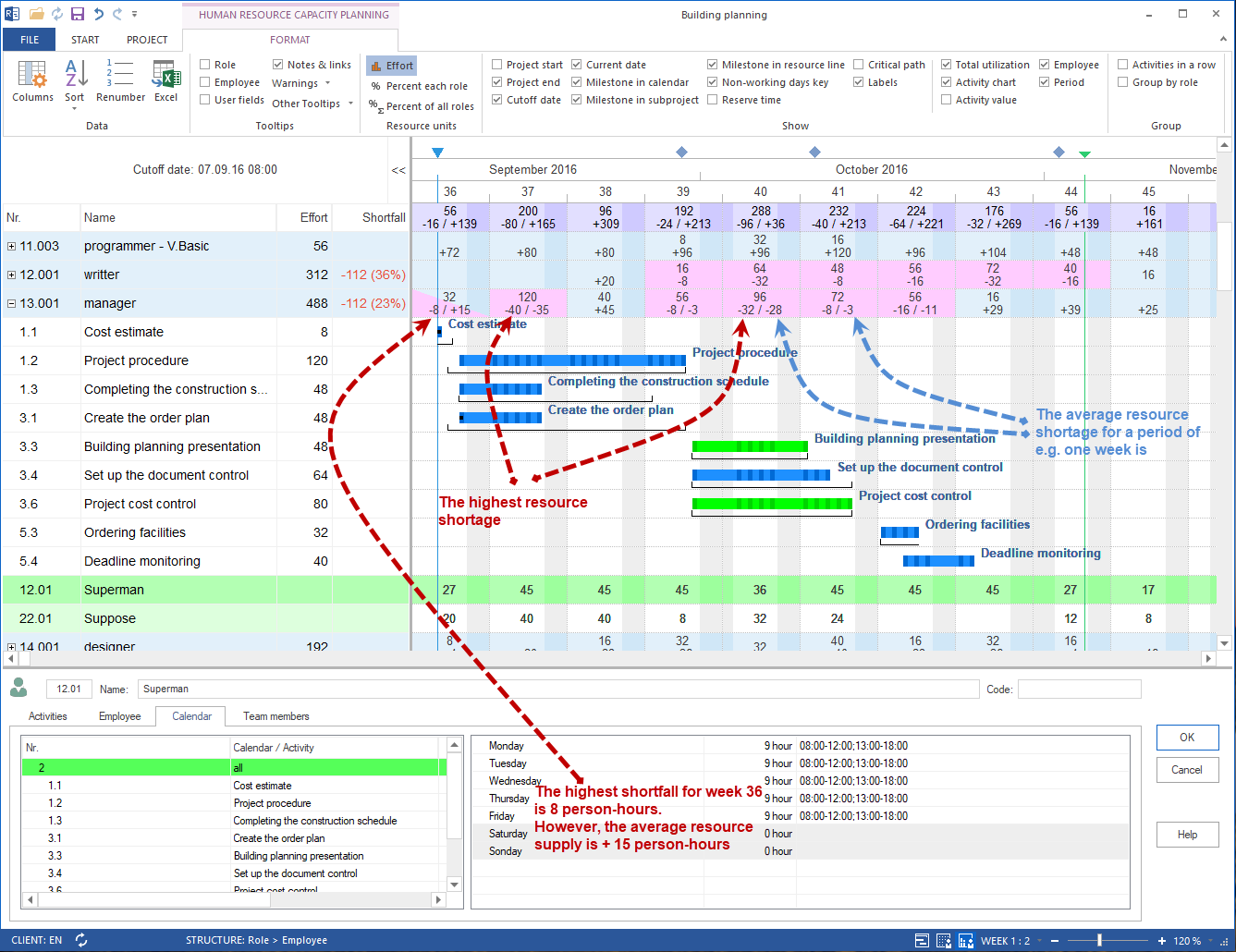
only a few employees are involved
responsibilities are already fixed
working times and absences are well known
no complex bottlenecks are expected
the project manager can assess availability directly
Risk: bottlenecks often become visible only after assignment.
Role-Based Planning
Role-based planning means that you first plan resource demand by professional qualification. Then capacity balancing checks whether suitable employees are available.
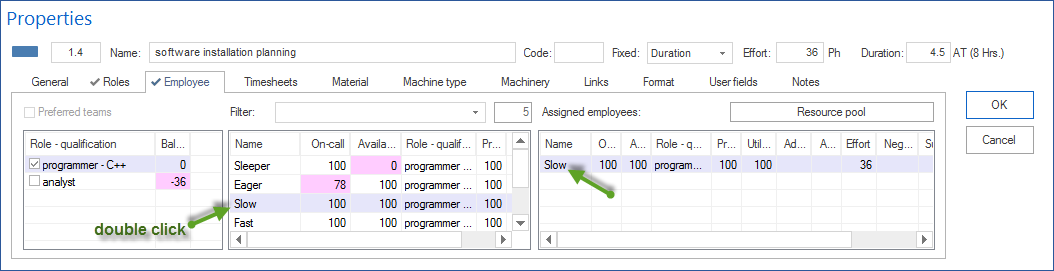
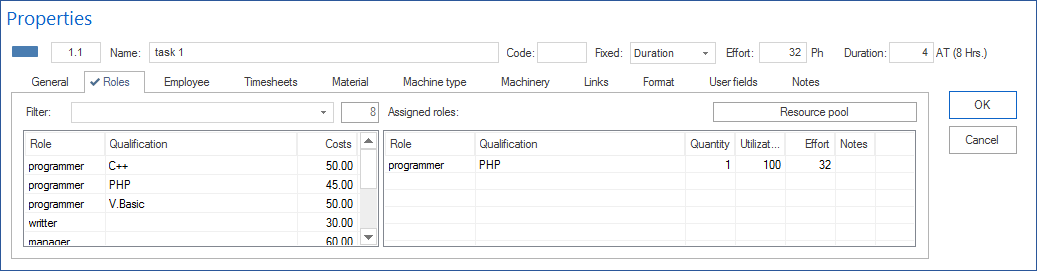
This approach fits when:
several employees have the same professional qualification
several projects compete for the same employees
vacation, illness, part-time work, or shift calendars are relevant
project dates depend on sufficient capacity
resource managers or the PMO are involved in assignment
Risk: the planning requires more master-data maintenance, but provides a better basis for decisions.
Decision Table
Situation |
Recommendation |
|---|---|
Small project with known team |
Direct employee assignment |
Several suitable employees |
Role-based planning with capacity balancing |
Non-working days are decisive |
Role-based planning and availability check |
Employee is intentionally fixed |
Direct assignment, then check utilization |
Several projects share resources |
Role-based planning in the portfolio context |